
Devlog · Episode 16
I bought a whole HUD and the game did not change
I bought a ready-made interface pack and found out the hard part was making it speak my game's language.
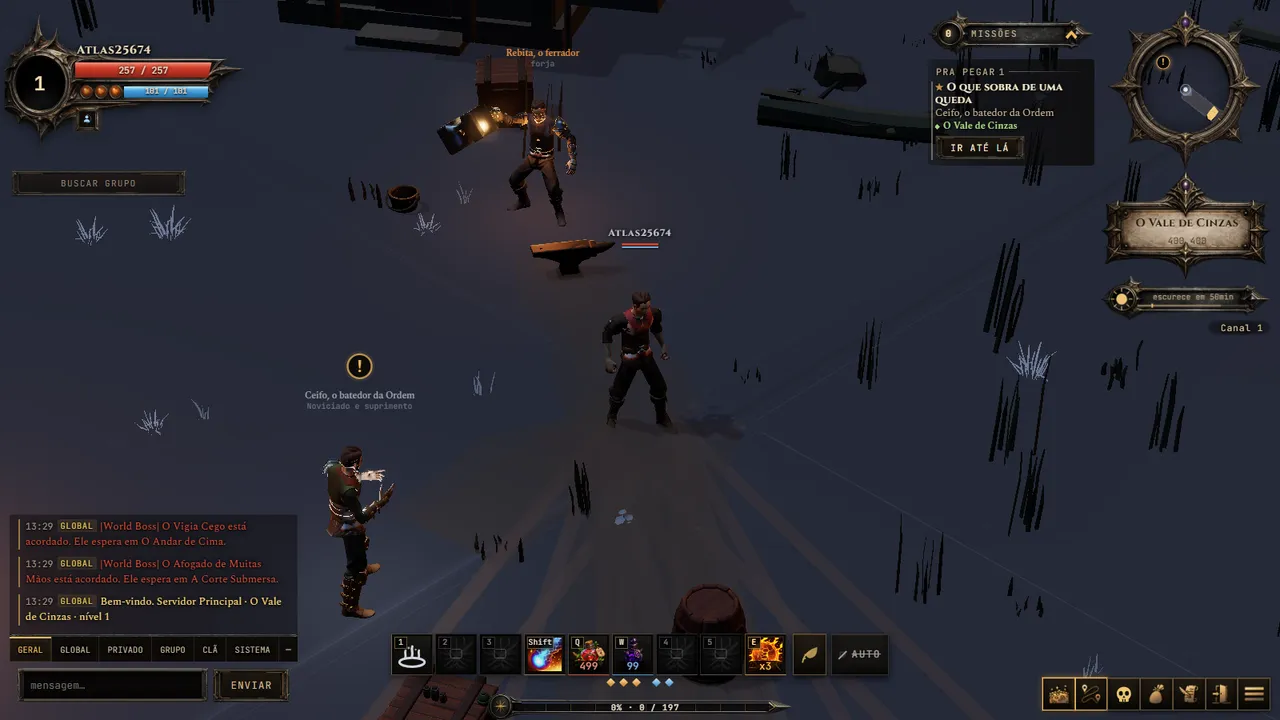
I bought a complete HUD and thought the job would be to install it and be done. It was not. With the interface pack in hand, the game looked exactly the same. A pretty pack does not become the game interface on its own.
The hard part was making it fit
Every piece of the pack had to take a real spot: the health bar, the minimap, the shortcuts, the menu, the backpack. I would test one element, it would cover the screen, I would adjust it, and another one would shift. It was a puzzle of millimeters.
For the player, the problem shows up in seconds. If the interface covers the ground, you do not see the creature coming. If a shortcut sits far from your fingers, you miss the key in the middle of a fight.
I did not want the player to feel like they were staring at an airplane dashboard. The game has to feel like a place, and the interface is only the window you look through. So I tested every screen size, from small to large, and redid whatever felt cramped or empty.
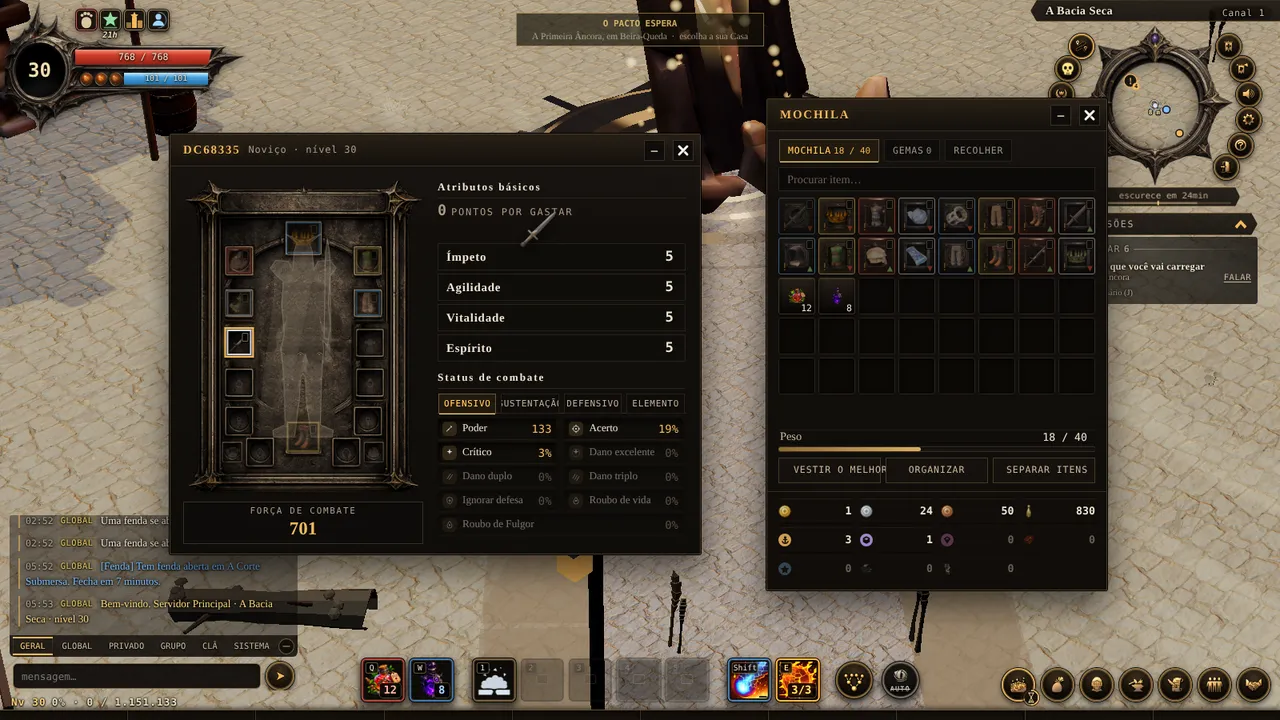
Minimap and shortcuts
The minimap was the first one to come out right. Before, it was a lost square in a corner. Now it shows where you are and where you are going, without competing with the rest of the screen.
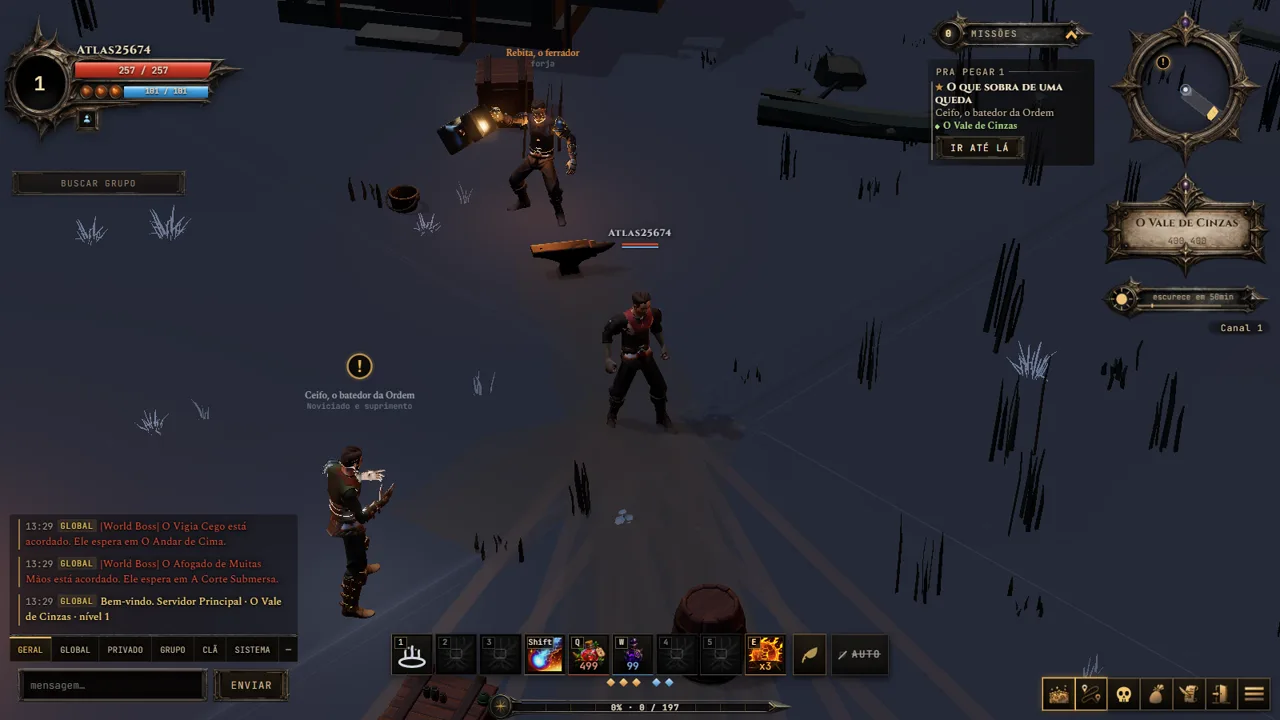
The shortcut bar went the same way. It now sits at the right height for your thumb and your eye, and each key is where you expect it.
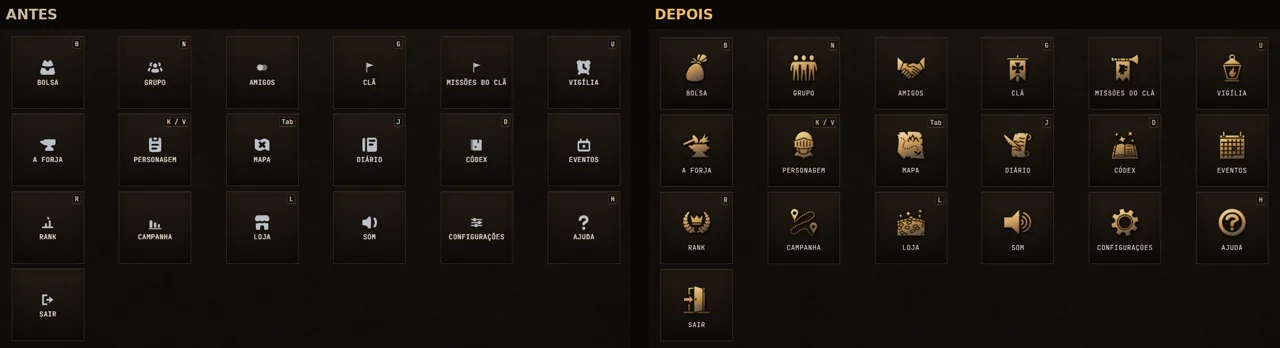
The menu was another problem. It had too many buttons and too many words. I grouped what was similar, removed what nobody used and let the icons do the talking. Anyone who knows the game finds everything blindfolded, and newcomers understand it from the drawings.
Less text, more numbers
I changed one golden rule: the HUD shows a number and a name, and nothing else. The explanation stays hidden and shows up when you hover. The screen can breathe, and whoever wants a detail can still get it.
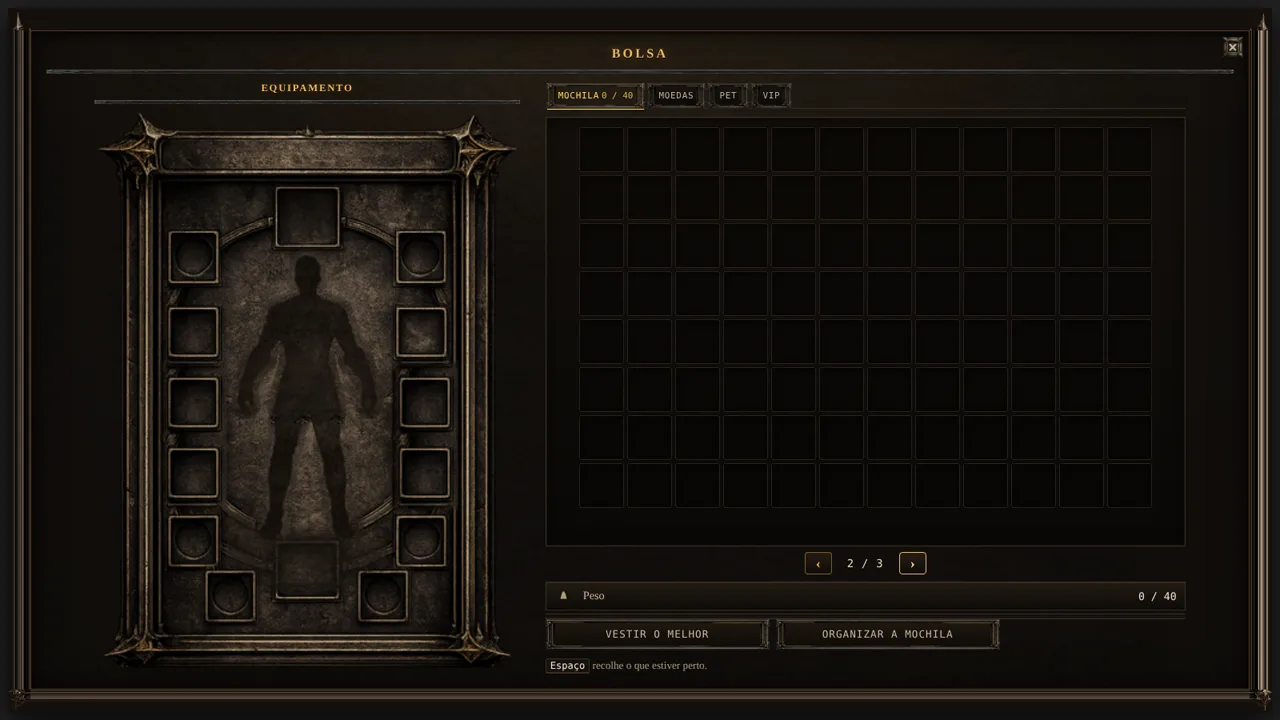
How it plays now
Today the HUD fits on small monitors and on big ones. You glance at it, see your health, your map and your shortcuts, and go back to the game. The pack was only the beginning. The real work was making it serve the game.